
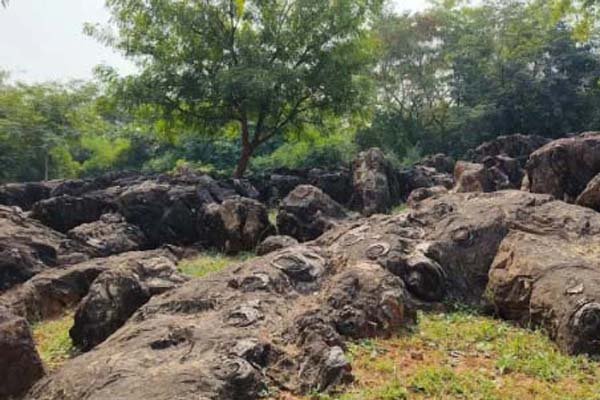
Nestled in the Sonbhadra district of Uttar Pradesh, India, Salkhan Fossil Park is one of the country's most significant geological heritage sites. Located near Salkhan village, about 15 kilometers from Robertsganj, the park preserves evidence of some of the earliest forms of life on Earth. The fossils found here are estimated to be around 1.4 billion years old, making the site an invaluable natural archive of our planet's ancient past.
A Window into Earth's Distant Past
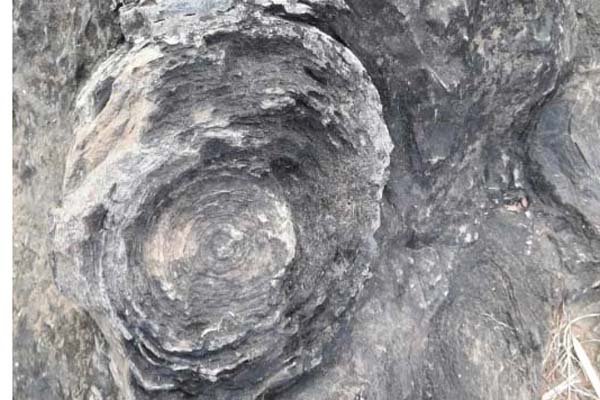
Long before the appearance of humans, animals, or even complex plants, Earth was inhabited primarily by microscopic organisms. Salkhan Fossil Park offers a rare glimpse into this ancient world through its extensive deposits of stromatolites, fossilized structures formed by colonies of microorganisms, particularly cyanobacteria (blue-green algae).These stromatolites represent some of the oldest known records of life on Earth. Their presence provides scientists with crucial information about the biological and environmental conditions that existed more than a billion years ago.
What Are Stromatolites?
Stromatolites are layered sedimentary structures created by the growth and metabolic activities of microbial communities. In ancient shallow seas, cyanobacteria formed mats that trapped and bound sediment particles. Over millions of years, repeated cycles of growth and sediment deposition produced distinctive layered formations that eventually fossilized.These microorganisms played a fundamental role in Earth's history. Through photosynthesis, they released oxygen into the atmosphere, contributing to the transformation of Earth's environment and paving the way for the evolution of more complex life forms.
Geological Significance
The fossils preserved at Salkhan are considered among the most important stromatolite deposits in India. Spread over approximately 25 hectares, the park contains a variety of fossil structures, including circular, dome-shaped, and columnar formations that can be observed directly on exposed rock surfaces.Geologists regard the site as a natural laboratory for studying Precambrian life and Earth's early biosphere. The exceptional preservation of the fossils allows researchers to investigate ancient ecosystems and environmental conditions that existed more than a billion years ago.
Scientific Importance
Salkhan Fossil Park attracts geologists, paleontologists, environmental scientists, and students from across India and abroad. The site provides valuable insights into:The evolution of early life forms.Ancient marine environments.The role of microorganisms in oxygenating Earth's atmosphere.Geological processes operating during the Precambrian era.The relationship between life and environmental change over geological time.Research conducted at the park contributes to a broader understanding of how life originated and evolved on our planet.
An Educational Treasure
Beyond its scientific value, Salkhan Fossil Park serves as an important educational destination. Students and visitors can observe billion-year-old fossil structures firsthand, transforming textbook concepts into tangible experiences.Educational tours to the park help promote awareness of geology, paleontology, biodiversity, and Earth's history. For many visitors, seeing evidence of ancient life preserved in rock is both inspiring and enlightening.
Conservation and Preservation
As a unique geological heritage site, Salkhan Fossil Park requires careful protection. Natural weathering, human interference, and a lack of public awareness can pose threats to the preservation of these ancient fossils.Experts emphasize the need for improved conservation measures, scientific monitoring, educational outreach, and sustainable tourism practices. Protecting the site is essential for ensuring that future generations can continue to study and appreciate this remarkable record of Earth's past.
Tourism Potential
The park has considerable potential as a destination for geotourism and science tourism. Its combination of scientific significance, natural beauty, and educational value makes it an attractive location for researchers, students, and travelers interested in Earth's history.Enhanced infrastructure, visitor facilities, interpretive centers, and promotional initiatives could help establish Salkhan as one of India's leading geological tourism destinations.